佩小姐的奇幻城堡
China-Africa Salon: A stadium in 2 years, a bond of 42 -- Chinese builders share their Kenya story_我的网站

一 | 讯 8月19日,中共山西省委宣传部、山西省人民政府新闻办公室举办开局起步“十五五”系列主题新闻发布会(晋中市专场)。
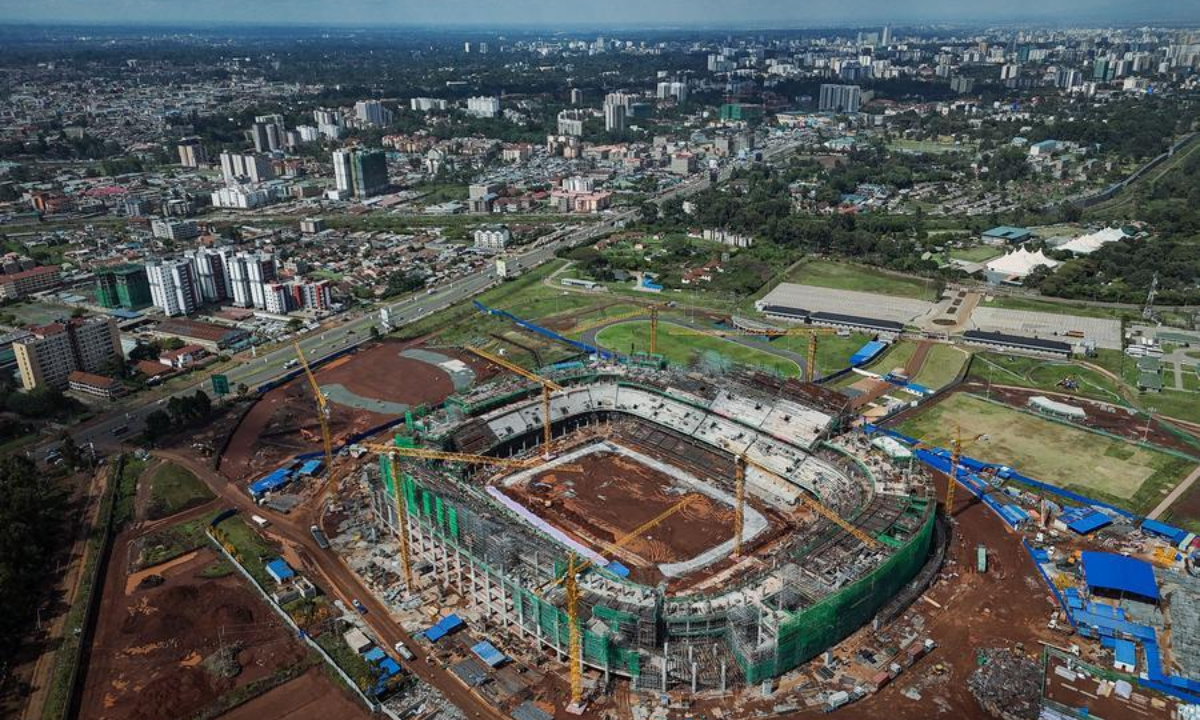
An aerial drone photo taken on March 19, 2025 shows the construction site of the Chinese-built Talanta Sports City in Nairobi, Kenya. (Xinhua/Han Xu)In Nairobi, a 60,000-seat football stadium is entering the final stage of construction. Built in just two years, the Talanta Stadium will serve as the main venue of the 2027 Africa Cup of Nations, co-hosted by Kenya, Uganda and Tanzania.
"The schedule was extremely tight -- just two years, while comparable projects elsewhere usually take more than three," Du Xiao, project manager of the stadium for China Road and Bridge Corporation (CRBC), told Xinhua in a recent interview. "There is a very real sense of pride."
According to Du, the stadium has no running track, bringing spectators close to the pitch. Its seats take on the green, red and black of Kenya's national flag, while the facade features the traditional shield and spear of the Maasai people.
Upon completion, the stadium is set to be renamed the Raila Odinga International Stadium, in honor of Kenya's late former Prime Minister Raila Odinga.
The roof adopts a cable-supported grid system erected with a "cable-first, steel-after" method, which Du said is the first of its kind independently designed and built by China. Without temporary steel supports, 48 radial cables are tensioned to lift six ring cables before steel trusses are laid on top, saving at least three months of construction time, with displacement controlled to the millimeter. In 2025 alone, some 1,300 containers of materials and equipment were shipped from China to the site.
For CRBC, the stadium is only the latest chapter of a much longer story. The company built its first road in Kenya in 1984, and over 42 years, its footprint has extended from roads to bridges, ports, railways and buildings.
Du Shan, the executive general manager of CRBC Kenya office, recalled that before 2008, Nairobi was cut apart by three rivers and a cross-district trip could take more than three hours. After CRBC completed the ring roads, the journey now takes about 50 minutes. The company is also expanding the A8, a national trunk road, from two lanes to four and six, she said.
On the Mombasa-Nairobi Standard Gauge Railway, wildlife corridors were built with a clearance of more than six meters, "so that giraffes can pass with their heads held high," Du Shan said.
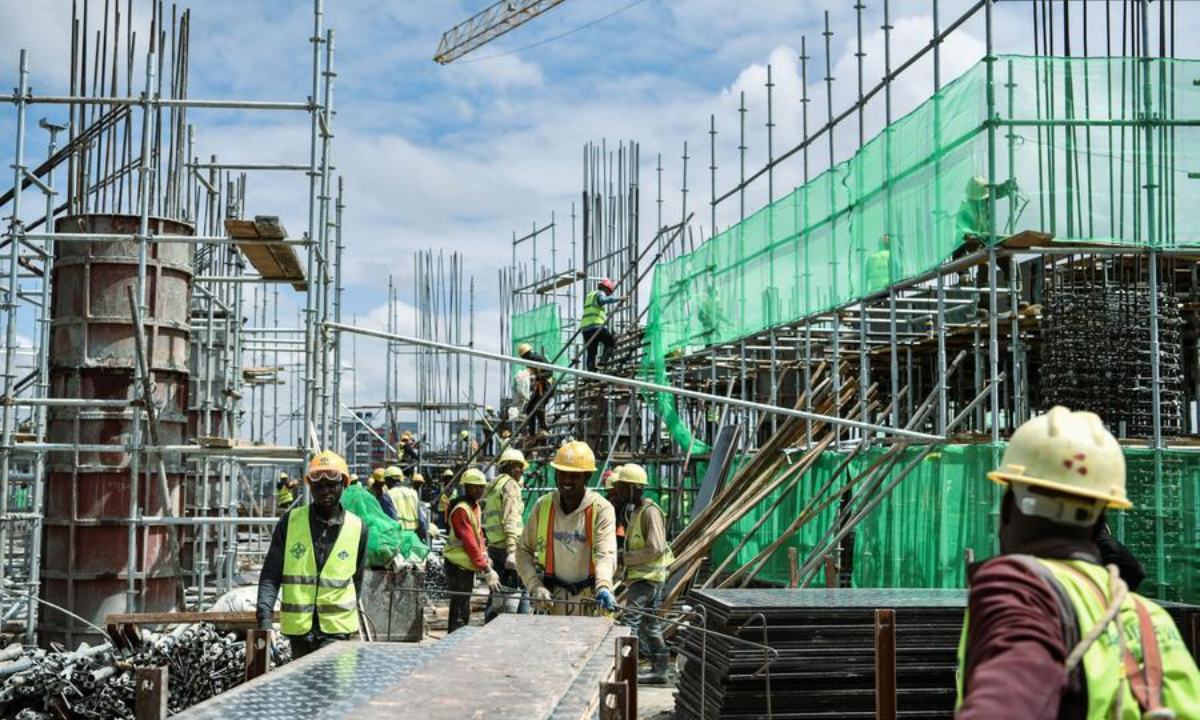
Workers are engaged at the construction site of the Chinese-built Talanta Sports City in Nairobi, Kenya, on March 18, 2025. (Xinhua/Han Xu)Du Xiao arrived in Kenya in August 2011 and has worked on the ring roads, the Mombasa-Nairobi railway, the Nairobi-Malaba railway and the Nairobi Expressway before taking on the stadium project.
"Working overseas, we should not arrive thinking about changing the place. We should first adapt to and learn from the local community," he said. "What many projects truly open up is not just roads and railways, but trust between people."
The stadium sits near Kibera, Kenya's largest informal settlement. Du Xiao remembers a local young man named Sammy, who had no skills when he applied for a job but volunteered for the project's equipment training and became a pump truck operator. "I asked him why he worked so hard. He said, 'I never thought I would have the chance to touch these machines. Now I feel I can support my whole family.'"
According to Du Shan, the project recruited nearly 500 young workers from the neighborhood during construction, many of whom have qualified as assistant engineers, while about 280 local youths were mentored into technical backbones during the construction of the Mombasa-Nairobi railway.
More than 350 CRBC employees have worked overseas for over a decade, and each year the company awards them a gold medal for long-term dedication, she said. "The medal is not only an honor, but also a kind of warmth. Because 42 years -- it has truly not been easy."
When his child was born, Du Xiao was at a critical stage of the Nairobi Expressway project and could not make it home. "People in overseas engineering live in two worlds -- the project site on one side, the family on the other. All you can do is try to do a little better on each side," he said.
"Maybe I will one day leave this country. But this stadium will remain," he said. "I came here to build projects. Then I found that this country has shaped who I am today."
。 会上,晋中市委常委、副市长,晋中国家农高区党工委书记、管委会主任李哲介绍,晋中坚持走有机旱作与特优农业融合发展之路,重点抓好5项工作。 一是聚焦空间布局,优化资源配置。根据地理气候、产业基础、资源禀赋,构建“两区三带”产业战略布局。两区,就是平川地区发展规模种养和精深加工,东山地区发展休闲农业和生态种养;三带,就是汾河百里设施蔬菜带、丘陵百里林果经济带、太行山百里“草畜粮”循环产业带。

二 | 引导项目跟着产业走、资金跟着产业投、人才技术向产业聚,争取“十五五”期间新建3个国字号产业基地。 二是聚焦科技赋能,发展新质生产力。依托晋中国家农高区28个国省级重点实验室,开展玉米、谷子等良种繁育推广,推进节水农业、丘陵农机等关键技术攻关,发展智慧农业、合成生物产业,发挥农高区科技引擎作用,赋能特优农业发展。 三是聚焦稳粮保供,发展绿色有机农业。一方面,在资源条件好的区域建设高标准农田,发展现代灌溉农业,推广“一年两作、两年三作”,提升粮食单产,保障粮食安全。

三 | 另一方面,选树可复制、可推广的先进典型,建设一批绿色、有机农业示范推广基地,生产出真正有机高品质的晋中地理标志性农产品,走向全国、全球高端市场,满足不同层次的消费需求。 四是聚焦精深加工,做好三产融合文章。跳出只卖原粮鲜果的老路,延伸产业链,提升附加值,以精深加工激活特优农业,把得天独厚的土特产资源优势转化为产业优势、经济优势。依托农高区牵引,突破加工技术瓶颈,健全标准体系,做强“农高晋品、太行山货”市级区域公用品牌,培育壮大市场主体,打造加工产业集聚区。

四 | “十五五”末,力争国家级龙头企业达到10家以上,农产品加工销售收入突破600亿元。 五是聚焦增产增收,强化惠农服务。建立“产业出题、院校揭榜、农高区中试熟化”机制,推动更多科技成果从实验室走向田间地头,把好技术转化成好收成。建设“1+N”现代农事综合服务中心,统筹提供“良种、良田、良机、良法”服务,助力农业生产降本增效。开发特优农业+文化、+旅游、+康养等新模式新业态,让农民在家门口就业增收。版权申明:凡注有“”或电头为“”的稿件,均为独家版权所有,未经许可不得转载或镜像;授权转载必须注明来源为“”,并保留“”的电头。 。
Current article:http://umw6un.cengzaodengchawonin.cyou/news/20260826_23659.html
Published on:04:10:38
